File Sharing
Hub users can share files and folders. Possible targets are:
-
public links
-
users
-
groups
-
teams
-
talk conversations
-
users or groups on federated Hub servers
Note
Some options may not be available due to administrative configuration. See administrator documentation for details.
Public link shares
You can share files and folders via public links.
A random 15-digit token will be created. The link will look like https://cloud.example.com/s/yxcFKRWBJqYYzp4.
A number of options are available for public folder shares:
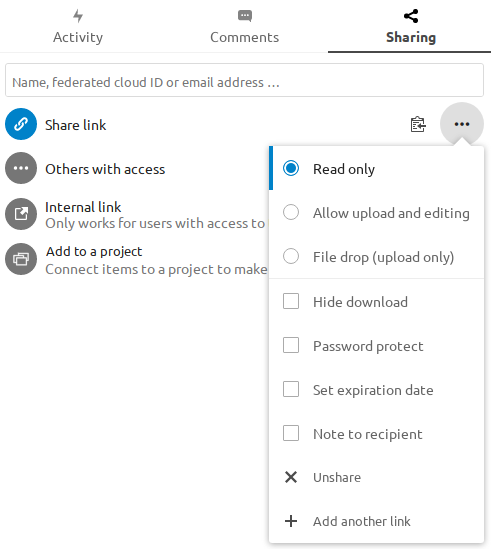
-
Read only to allow viewing and downloading
-
Allow upload and editing
-
With File Drop, the shares can only upload files to a folder without seeing the files that are already in that folder.
-
Hide download hides the download buttons and the default browser right-click options in order to make downloading for the sharee harder
-
Password protect
-
Set expiration date will automatically disable the share
-
Note to recipient
-
Unshare to revert the share
-
Add another link to create multiple public links with different rights
For public file shares, you may allow editing the file with one of Hub’s collaborative editing solutions:
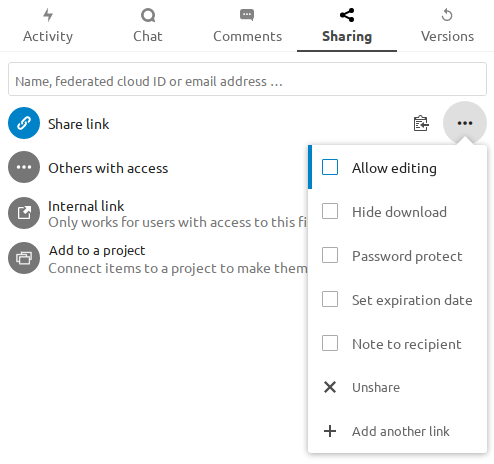
Note
Password protection as well as file expiration are also propagated using Federated File Sharing
Internal shares with users and groups
When sharing with users, groups, teams, or members of a Chat conversation, rights for the files or folder contents are adjustable:
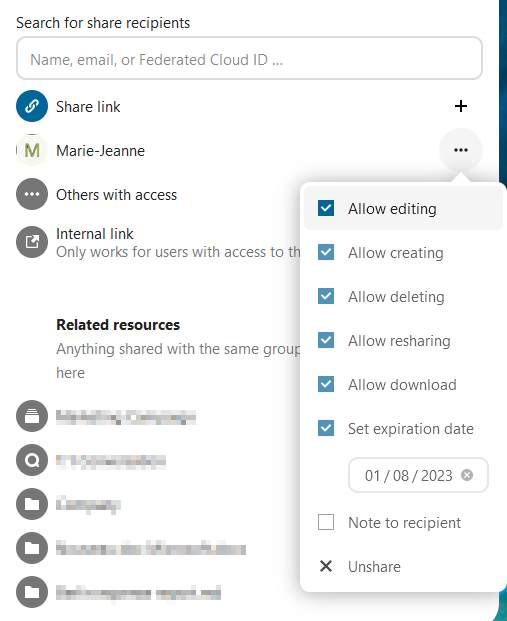
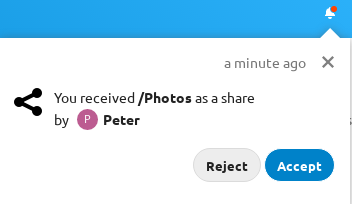
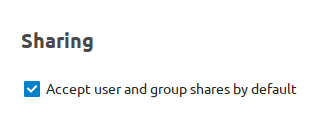
As a share, you can configure if you automatically want to accept all incoming shares and have them added to your root folder, or if you want to be asked each time if you want to accept or decline the share.
For adjusting the acceptance setting, go to Settings > Personal > Sharing:
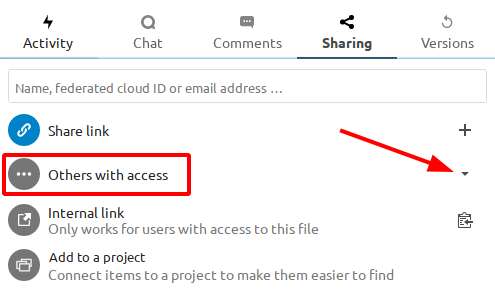
Others with access
In order to find out if a file or folder is accessible to others through sharing of a superior folder hierarchy level, click on Others with access in the sharing tab:
The list shows all users, groups, chats, etc. that the current object has been given access to through the sharing of a superior folder in the hierarchy:
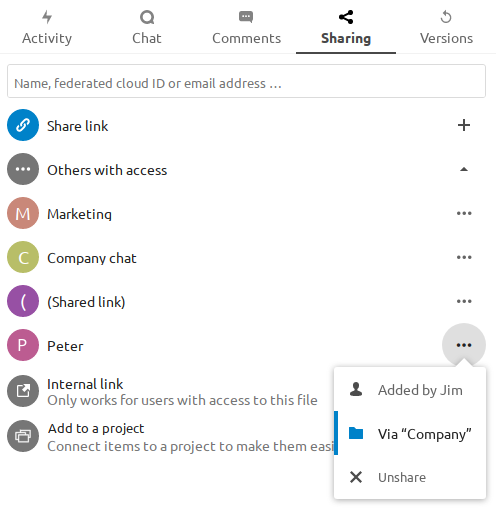
Click on the three dots to:
-
see who initiated the share
-
see where the share was initiated (click to navigate to the folder, as far as you have access there)
-
unshare the initial share (only accessible for the share owner)
Note
This information is only visible to the owner of a file/folder or shares with resharing rights.
Federated Shares
Federation Sharing allows you to mount file shares from remote Hub servers, in effect creating your own cloud of Hubs. You can create direct share links with users on other Hub servers.
Creating a new Federation Share
Federation sharing is enabled by default. Follow these steps to create a new share with other Hub for Teams servers:
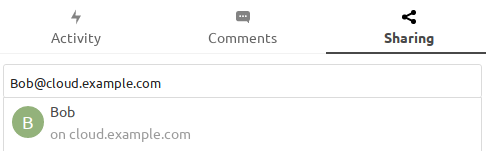
Go to your Files page and click the Share icon on the file or directory you want to share. In the sidebar enter the username and URL of the remote user in this form: <username>@<nc-server-url>. In this example, that is [email protected]:
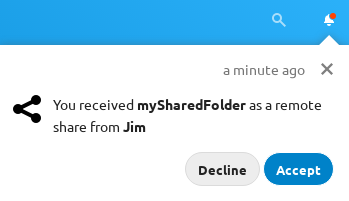
The sharee is receiving a notification in their Hub, allowing them to either accept or decline the incoming share:
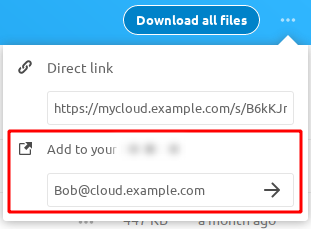
Adding a public share to your Hub
Hub public link share pages offer an option to add that file or folder as a federated share into your own Hub instance. Just enter your <username>@<nc-server-url> just like shown for outbound shares above: